Compression Tester for Engine Explained: A UK Buyer's Guide
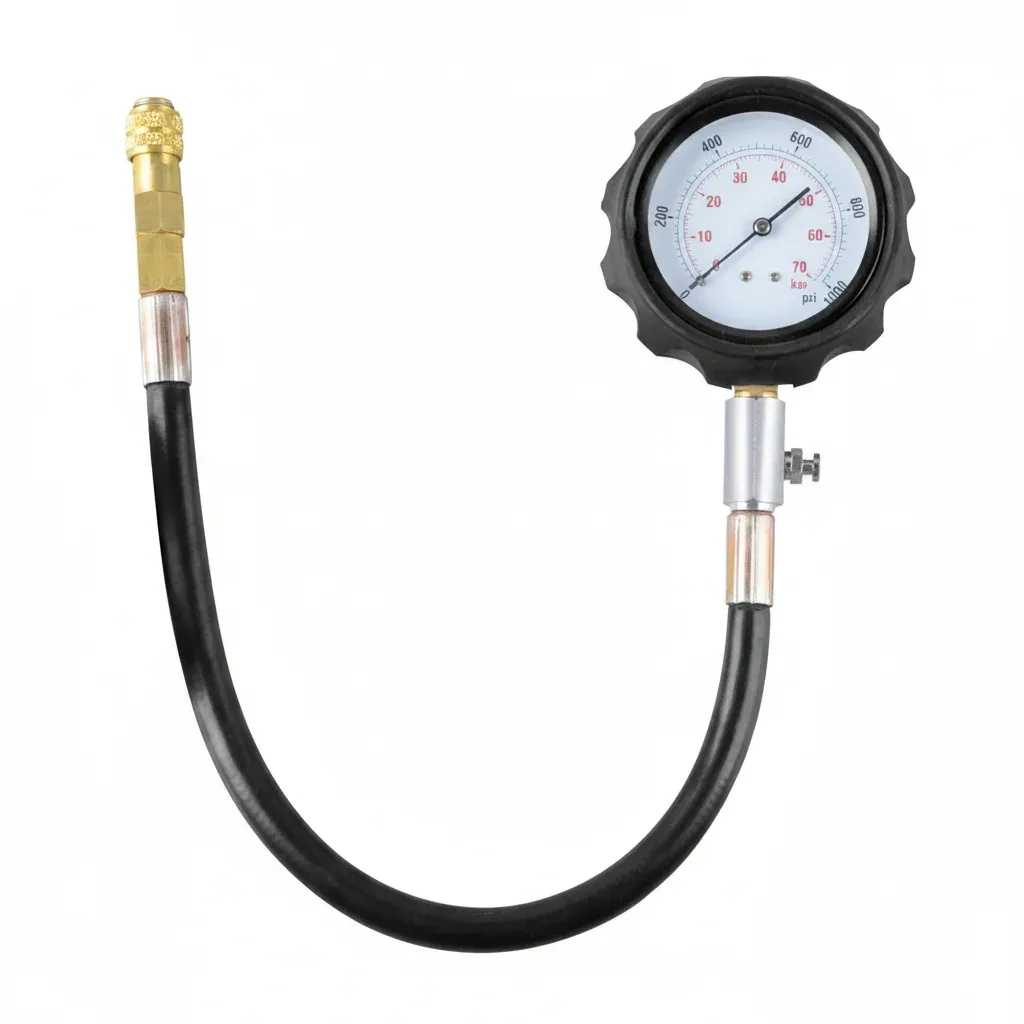
TL;DR: A compression tester for engine diagnostics measures the peak pressure each cylinder builds while the engine cranks — the most direct evidence of internal mechanical health you can get without stripping anything. Petrol engines test through the spark plug hole at relatively low pressures; diesels need a high-pressure kit with glow plug or injector adapters. If you are choosing your first tester, gauge accuracy and adapter coverage matter far more than the badge on the box.
Key Takeaways
- A compression tester for engine work reads peak cylinder pressure during cranking — one number per cylinder, compared against its neighbours.
- Petrol engines typically crank at 120–180 PSI; diesels commonly reach 300–500 PSI, so the two need very different gauges.
- A spread of more than 10–15% between the highest and lowest cylinder points to a weak bore, rings or valves.
- One properly specified kit bought once beats a bargain tester replaced twice — a lesson most technicians learn the expensive way.
What does a compression tester actually tell you?
The tester screws into the spark plug hole on a petrol engine, or the glow plug or injector port on a diesel, and records the maximum pressure the piston builds on its compression stroke. That single reading answers the question every other diagnostic dances around: is this engine mechanically sound? Sensors, live data and fault codes all describe symptoms — cylinder pressure is the cause-level evidence underneath them.
You rarely judge the number in isolation. What matters is the pattern across cylinders: four healthy, consistent readings clear the bottom end of the engine in minutes, while one low pot tells you exactly where to look next. That is why a compression test sits so early in any diagnostic routine taught at college — it rules the big, expensive failures in or out before anyone orders parts.
Petrol vs diesel: the difference that decides which kit you buy
Petrol engines run compression ratios around 8:1 to 12:1 and typically crank at 120–180 PSI. Diesels ignite fuel by compression alone, running ratios from roughly 15:1 to 23:1, and a healthy one commonly cranks at 300–500 PSI (about 20–35 bar). Connect a petrol gauge to a diesel and at best it maxes out; at worst the gauge is destroyed. The access point differs too: petrol testers thread into the spark plug hole, while most UK diesels are tested through a glow plug adapter (Ford Transit, VW TDI) or an injector adapter (some PSA and Renault units).
If your work is mostly diesel — vans especially — our diesel engine compression tester guide goes deeper on gauge range, accuracy and adapter coverage. And when you are ready to run the test itself, the step-by-step how to test diesel compression guide covers safe preparation, adapter choice and reading the results.
Your first tester: what earns space in an apprentice's toolbox
If you are a first- or second-year apprentice, you already know the maths: a full premium-brand diagnostic setup costs more than a month of your wages, and the workshop's own tester lives in the foreman's cabinet — borrowing it every time means favours owed. A compression tester is one of the first serious tools worth owning outright, because it is the one that lets you take on weekend jobs for family and neighbours with a straight face.
What to prioritise when you buy once and buy right:
- Dual-scale gauge (bar and PSI) — workshop manuals and older technicians switch between units constantly.
- Stated accuracy — ±2% of full scale is the level at which a reading is worth writing down.
- Adapter coverage in a labelled case — running out of adapters mid-job is how a tester ends up back in its box for good.
- Serviceable fittings — brass quick-release couplers and a reinforced hose survive being dropped on concrete; bargain alloy ones often do not.
The DAYUAN 17-piece diesel compression tester kit is built to that spec — 0–70 bar dual-scale gauge, ±2% accuracy, brass quick-release coupler and a blow-moulded case — with a 12-month warranty and 30-day returns, so a first big tool purchase is not a leap of faith.
Is a cheap compression tester worth it?
Honest answer: sometimes. If you only ever touch petrol hatchbacks, a basic screw-in petrol tester costs little and does the job for occasional use. The risk sits at the diesel end, where bargain kits fail in two ways that matter — seals that weep under high pressure, and gauges that read optimistically. Both produce a false low or false healthy reading, and a misdiagnosis costs someone real money on parts that were never the problem. The moment your readings inform a repair decision — yours or a customer's — accuracy stops being a luxury.
There is also a middle path worth naming: borrow the workshop tester while you are learning the procedure, and buy your own the week your first private job comes in. The tool pays for itself in one or two weekend diagnoses.
Frequently Asked Questions
Can I use a petrol compression tester on a diesel engine?
No. Diesel cranking pressures commonly sit between 300 and 500 PSI, beyond what petrol gauges are built for. Use a diesel-rated kit with the correct glow plug or injector adapters.
What compression reading counts as too low?
There is no universal number — engines differ by design. Compare cylinders on the same engine first: anything more than 10–15% below its neighbours deserves investigation, and the manufacturer workshop manual gives the absolute minimum for your engine code.
Do I really need my own tester as an apprentice?
Not on day one — most workshops have one you can learn on. Owning your own starts to make sense when you take on private weekend work, want to practise interpretation at home, or are tired of asking. It is a tool you keep for a career, not a consumable.
Should my first compression tester be petrol or diesel?
Buy for the work in front of you. Petrol-only work needs only a basic kit; if vans and diesel cars are on your ramp — and in most UK independent workshops they are — a diesel-rated kit with full adapter coverage is the one that earns its keep.
Stop guessing on engine wear — the DAYUAN 17-piece diesel kit covers glow plug and injector ports up to 70 bar.
Free UK delivery · 30-day returns · 12-month warranty
View the 17-Piece Diesel Compression Tester — £174.88