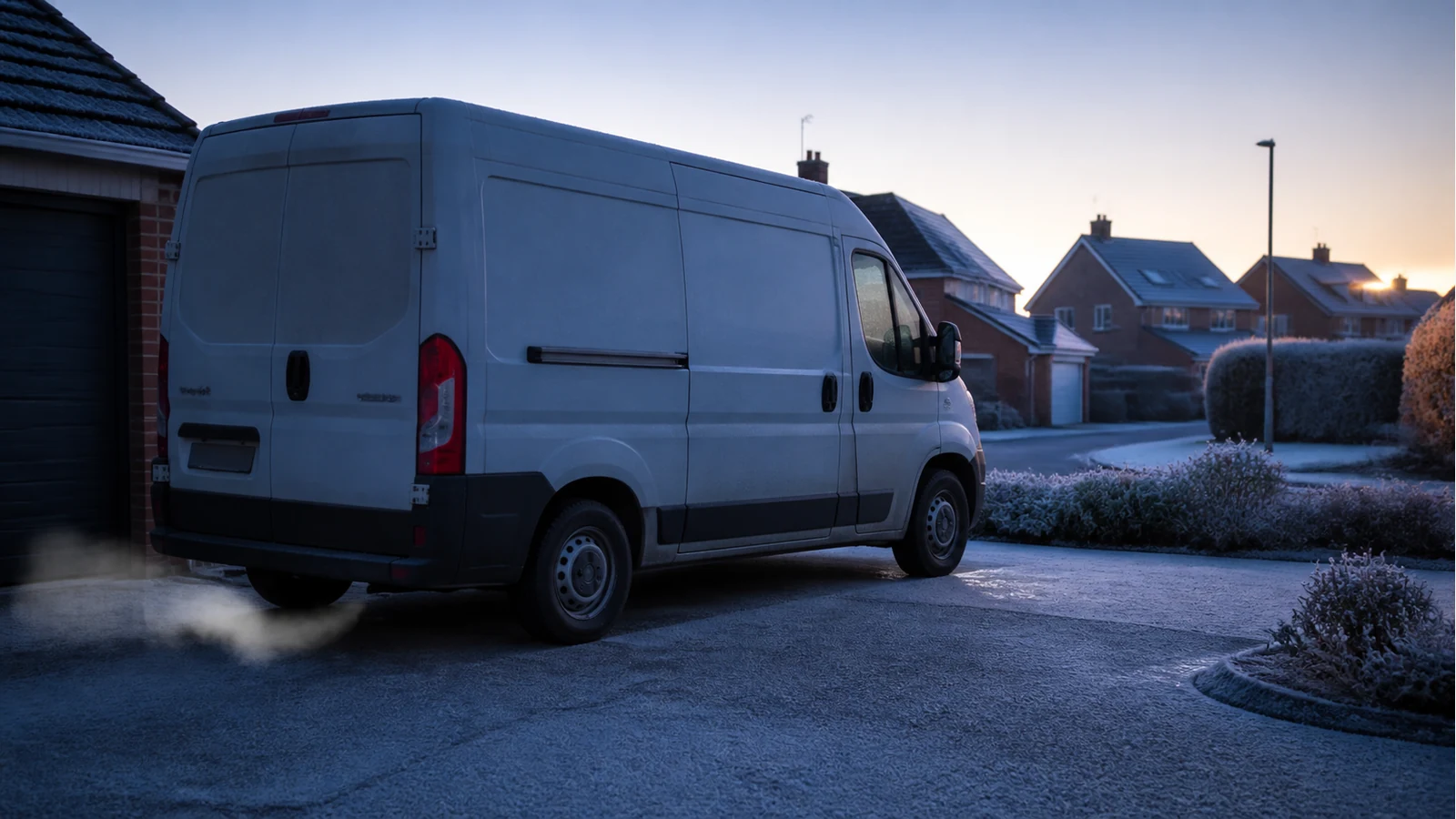
Diesel Van Hard To Start Cold Morning Diagnosis Uk
Direct answer: if a diesel van is hard to start on a cold UK morning, check glow plugs, battery cranking speed and fuel delivery before treating compression as the cause. Compression testing becomes useful after those common cold-start faults have been ruled out or when white smoke and uneven cranking keep pointing to a mechanical problem.
That order matches how UK diesel specialists frame hard-start diagnosis: British Diesel Systems separates injectors, glow plugs, fuel pump, filter, air ingress and low compression, and Star Garage Mansfield notes that cold-start difficulty with white smoke can often point first towards glow-plug failure. See British Diesel hard-start guide and Star Garage glow-plug symptoms guide.
Cold Morning Diagnostic Ladder
| Symptom | Check first | Compression enters when |
|---|---|---|
| Slow cranking, dash dimming | Battery, starter, earths | Cranking speed is restored but starting is still poor. |
| White smoke after long cranking | Glow plugs and relay | Glow system tests good and the van still needs extended cranking. |
| Starts then dies | Fuel filter, air ingress, lift supply | Fuel delivery is stable but one or more cylinders sound weak. |
| Uneven cranking rhythm | Mechanical condition | A controlled cylinder-by-cylinder compression test can confirm the pattern. |
Do Not Skip The Cheap Checks
A weak battery can make a good diesel look mechanically tired because compression readings depend on consistent cranking speed. Likewise, failed glow plugs can mimic low compression on frosty mornings because the engine never gets the heat it needs to fire cleanly.
When Compression Is Worth Paying For
Compression is worth testing when the van has had glow-plug and fuel checks, still takes too long to fire, and the owner needs a repair-or-sell decision. Record all cylinder readings, the engine temperature, battery condition and cranking count so a garage can interpret the result rather than repeat the whole job.
Stop Conditions
Stop and use a workshop if warning lights suggest a live fuel-system fault, if you cannot safely disable fuelling, if glow plugs are seized, or if the van is needed for work and a failed DIY attempt would strand it. Common-rail fuel systems are not the place for guessing.
Next Step
If you already own a diesel compression kit, write down the four readings and compare them with manufacturer data. If you do not, ask a garage to test compression after the cheaper checks are complete; the aim is a decision, not another blind parts swap.
FAQ
Should I replace glow plugs first? Test them first where possible. Replacing parts blindly can waste money if the battery or fuel side is the real cause.
Does white smoke always mean low compression? No. It can be unburnt fuel from poor cold ignition, so glow plugs and cranking speed still come before compression.