Diesel Engine Compression Tester Explained: A UK Buyer's Guide
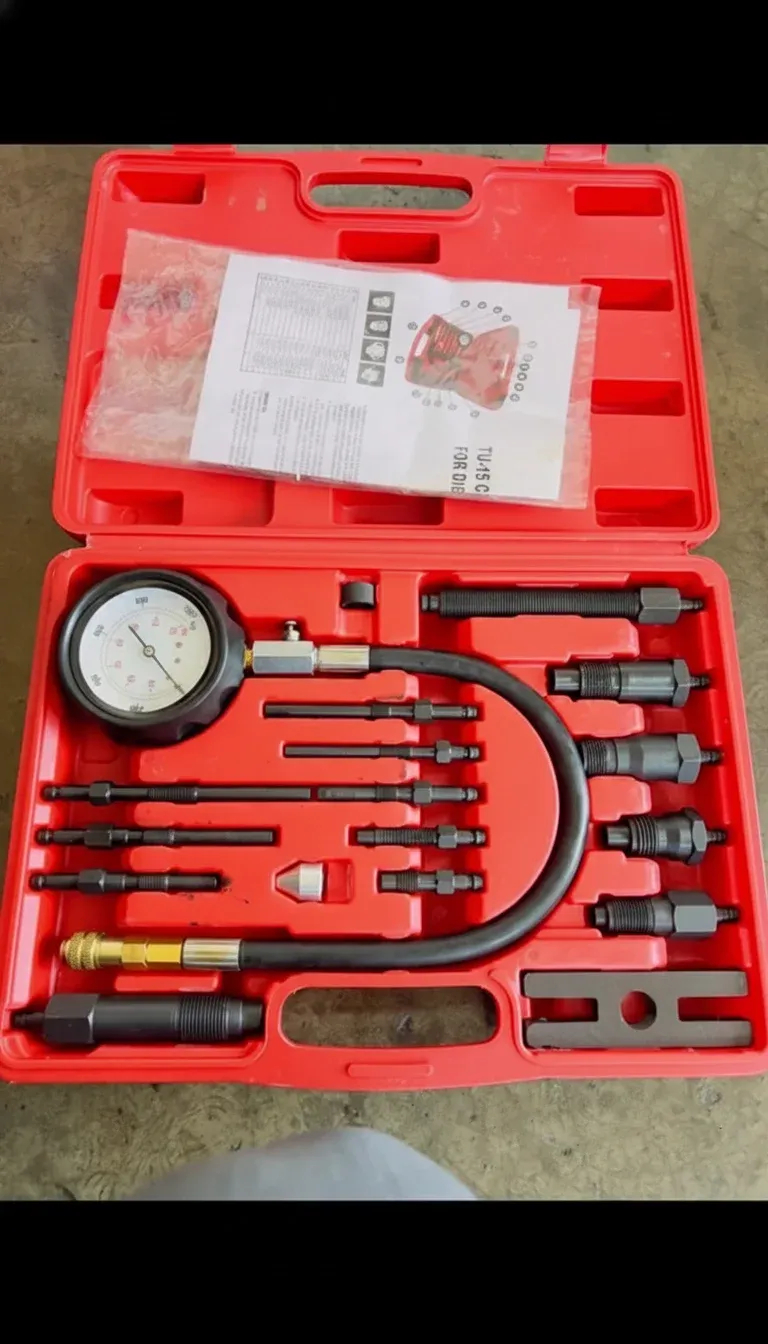
TL;DR: A diesel engine compression tester measures the pressure each cylinder builds while the engine cranks, connected through a glow plug or injector port. Because diesels ignite fuel by compression alone, the kit must read far higher than any petrol gauge — 0–70 bar (0–1000 PSI) is the working standard. For a UK workshop the buying decision comes down to three things: gauge range, accuracy you can quote, and adapter coverage across the vans that actually come through your door.
Key Takeaways
- Diesel engines run compression ratios of roughly 15:1 to 23:1 (petrol sits around 8:1 to 12:1), so a diesel engine compression tester needs a 0–70 bar / 0–1000 PSI gauge.
- A healthy road-going diesel typically cranks at 300–500 PSI (about 20–35 bar) — but the spread between cylinders matters more than any single number.
- ±2% full-scale accuracy is the point at which a reading becomes evidence you can quote to a customer, not just a hint.
- Never wet-test a diesel: the combustion chamber is so small that added oil risks hydrolock, and the oil itself can ignite under compression.
What is a diesel engine compression tester?
It is a heavy-duty pressure-testing kit that records how much pressure each cylinder produces during cranking. Where a petrol tester threads into the spark plug hole and reads modest pressures, a diesel kit connects through the glow plug or injector port and must withstand several times the load — which is why proper kits use reinforced hoses, high-range gauges and machined adapters rather than the lighter fittings petrol sets get away with.
The reading it gives you is the closest thing engine diagnosis has to ground truth. Fault codes and live data describe what the sensors see; cylinder pressure tells you what the metal is actually doing.
Why one test protects the whole diagnosis
Every winter the same queue forms outside UK workshops: diesels that crank but will not start. Glow plugs, fuel delivery and low compression all mimic each other from the driver's seat, and replacing parts on a hunch and getting it wrong costs more than the parts — it costs the customer's confidence in your workshop. A compression test takes minutes per cylinder and splits the diagnosis cleanly: healthy, even readings send you to the fuel and glow plug side; a weak cylinder ends the guessing on the spot.
There is a commercial edge to it as well. A 75 mm dial showing one cylinder well down against its neighbours is something a customer can see with their own eyes — it turns a difficult quote conversation into an approved repair, with numbers on the job card to back it.
What faults can a diesel engine compression tester reveal?
Worn piston rings or bore wear
Gradual pressure loss across high-mileage cylinders, often alongside rising oil consumption and hard cold starts. Wear tends to show as one or two cylinders drifting below the rest long before the engine fails outright.
Poor valve sealing
A burnt or badly seated valve leaks pressure past the head and usually drops a single cylinder sharply rather than gradually.
Head gasket failure
Two adjacent cylinders reading low together is the classic signature, sometimes with coolant traces where none should be.
Cylinder imbalance
The rule of thumb: the lowest cylinder should sit within 10–15% of the highest. Uniformly low readings across all cylinders point instead to a procedure fault (weak battery, leaking adapter seal) or general wear — worth ruling out before condemning an engine.
How the test works on a diesel
Most UK diesels — Ford Transit, VW Transporter, Mercedes Sprinter among them — are tested through the glow plug port: remove one plug, thread the matching adapter, crank for a few seconds with the fuel system disabled, and record the peak. Some engine families use the injector port instead, which is where an H-type clamp earns its place for older injector designs that standard screw-in adapters cannot hold.
One discipline matters above all: dry testing only. The petrol-era trick of squirting oil into a low cylinder to re-test has no safe place on a diesel — the chamber volume is tiny, the added oil can hydraulically lock the piston, and under diesel compression the oil itself can ignite. If a dry reading is low and you need to separate rings from valves, move to a leak-down test rather than a wet re-test. A compression test confirms mechanical sealing; it does not replace leak-down or timing checks when a major rebuild decision is on the table.
For the full procedure — preparation, adapter choice, cranking and interpretation — follow our step-by-step how to test diesel compression guide, and for TDCi access points and normal readings see the Ford Transit diesel compression test guide.
What to look for when buying a diesel engine compression tester in the UK
Gauge range and scale
0–70 bar / 0–1000 PSI dual scale is the benchmark. The dual scale is not a luxury: workshop manuals quote bar or PSI depending on age and origin, and converting in your head mid-job is how mistakes happen. A large dial — 75 mm is the practical standard — reads at arm's length in a dim engine bay.
Accuracy you can quote
±2% of full scale is the difference between a reading you trust privately and a number you are happy to put on a customer's invoice. Budget gauges that drift make cylinder comparison meaningless, and cylinder comparison is the whole diagnostic method.
Adapter coverage for a mixed UK workload
The kit should cover the Transits, Transporters and Sprinters that fill a UK workshop in winter without ordering extra adapters — running one adapter short on a booked-in van is a morning lost. Glow plug and injector adapters, spare seals and an H-type clamp for older injectors are what full coverage looks like in practice.
Build quality that survives a workshop
Solid brass quick-release couplers seal reliably under high pressure; a reinforced 360 mm flexible hose reaches awkward ports without bulging; a one-touch pressure release lets you run all four cylinders without unthreading the gauge each time; and a blow-moulded case keeps seventeen small parts from scattering across the van floor. The DAYUAN 17-piece diesel engine compression tester kit is specified to exactly this standard at £174.88 — with a 12-month warranty, 30-day returns and free next-day UK delivery on orders before 2 PM, so a broken or missing tester does not cost you a week of jobs.
Frequently Asked Questions
What PSI should a diesel engine read?
Most road-going diesels read 300–500 PSI (roughly 20–35 bar) when healthy, but always compare cylinders on the same engine and check the manufacturer specification for your engine code rather than chasing a single universal number.
Can low compression cause white smoke?
Yes. A weak cylinder burns incompletely, and unburnt fuel leaves the exhaust as white or grey smoke — most visibly on cold starts and under load.
Is a wet compression test safe on a diesel engine?
No. Adding oil to a diesel cylinder risks hydrolock because the combustion chamber volume is so small, and the oil can ignite under compression. Diagnose further with a leak-down test instead.
Will one kit cover a mixed fleet of UK vans?
A well-specified 17-piece kit covers the glow plug and injector ports of most popular UK light commercials, including the Ford Transit, VW Transporter and Mercedes Sprinter. For unusual or older engines, check the adapter list against your engine code before you buy.
Test before you replace parts — the DAYUAN 17-piece diesel kit covers glow plug and injector ports up to 70 bar.
Free UK delivery · 30-day returns · 12-month warranty
View the 17-Piece Diesel Compression Tester — £174.88